Florida’s RON Reality Check for 2026: Updating Old Lists for a Digital World
Only seen in grainy photographs — the kind resembling a robbery suspect on a mini-mart camera — but rumored to exist: the elusive underwriter in the wild, a creature rarely seen by the naked eye.
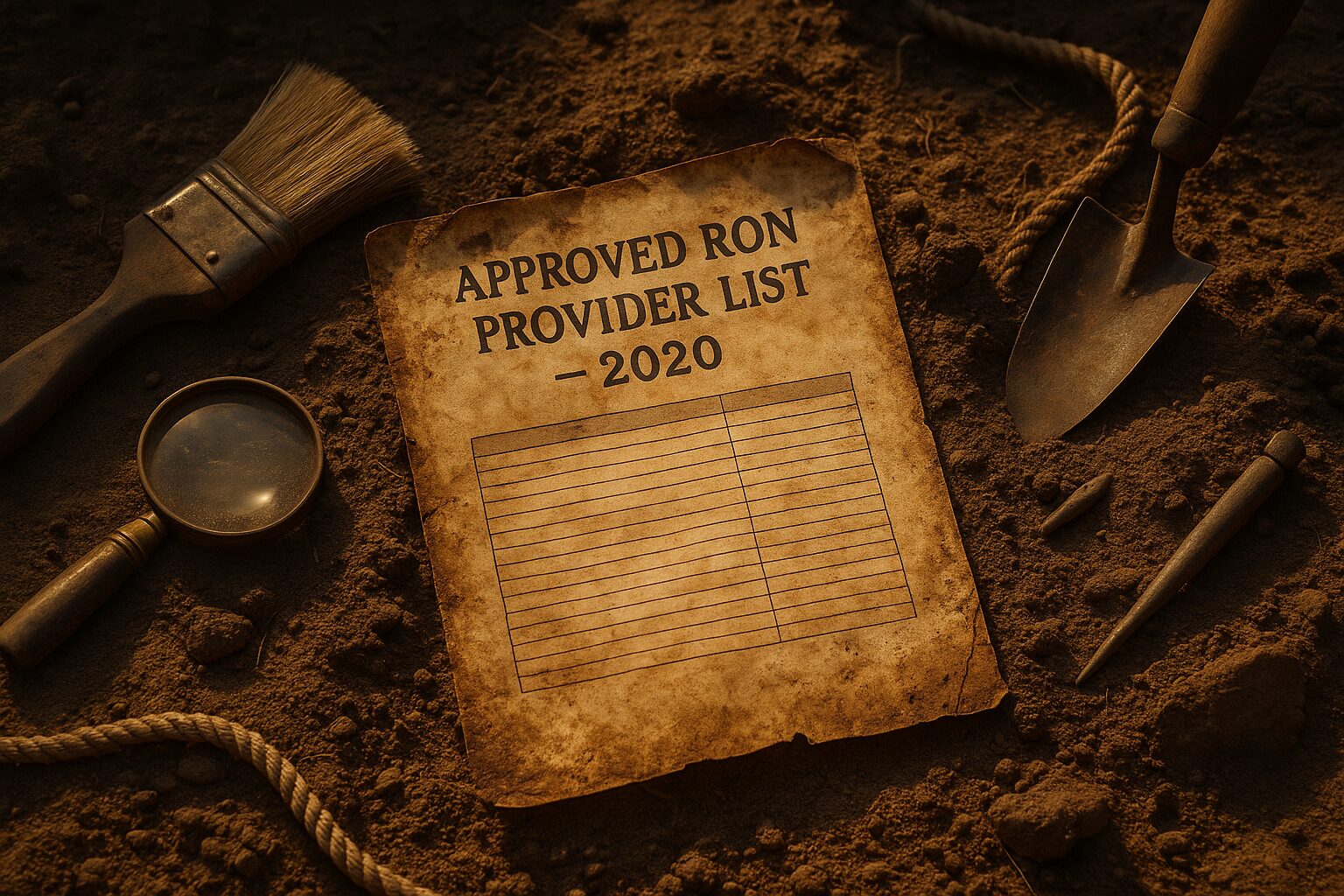
I’ve never met one up close, but I’ve heard things… the sort of stories whispered around a campfire when the Wi-Fi goes out. Rumors of a fleeting silhouette near the escrow desk, clutching the sacred relic: the internal list of “approved” RON providers.
Born in the Pandemic, Raised by Chaos
When Florida’s RON law took effect on January 1, 2020, nothing about the market was “ready.”
There were no established RON companies waiting in the wings. There was just us — building Florida’s first dedicated online notarization operation in real time.
Because authorizations are issued to individuals, not companies, our historical place in the RON timeline is unusually precise:
Our first approved online notary was #34 on the Florida Secretary of State’s brand-new list — back when the entire roster fit on one sheet with room for lunch notes.
We launched the RON portion of our website in February 2020. Days later, the world shut down.
Documents didn’t stop moving, so neither did we. Everything went remote — seller packages, POAs, affidavits, international documents, and Florida apostilles.
A few Clerks of Court reached out because their counters were closed and the usual deputy clerk stamp wasn’t available. We helped them keep vital workflow alive.
Then came a memorable battle with the Florida Department of Health, which initially refused to recognize RON — despite, you know, being the Florida Department of Health, supposedly bound by Florida law like the rest of us.
We bypassed the talking heads and went straight to their legal department. Problem solved in minutes.
In 2021, the National Notary Association named our CEO — yes, my husband, and yes, I’m proud — Notary of the Year, recognizing his early, boots-on-the-ground work in Florida’s RON system.
Trial by fire? More like trial by wildfire — followed by a firmware update.
The Underwriter Encounter That Made My Week
An underwriter recently refused to even consider working with us because we weren’t on their internal list.
Fair enough. Lists exist. Lists comfort people. Lists can even be cradled and fondled — with care.
But then came the line delivered with the seriousness of a medical diagnosis:
“Do you use DocVerify? They’re on our list.”
Delivering my reply wasn’t calm or clinical — it felt like I’d hit a comedic lottery. My heart rate actually went up, because I knew I was seconds away from delivering the best one-liner of my professional life:
A perfectly timed pause and then…
“DocVerify has been out of business for over a year.”
What I didn’t add: they were clunky, outdated, and circling the drain long before they finally assumed room temperature.
If your approved-provider list includes platforms that achieved algor mortis in 2024, it may be time for an ecosystem update.
Florida Statutes vs. Fossilized Lists
Florida Statute 117.021(4) is brutally simple:
The notary selects the technology — not the receiving institution.
No interpretive dance required. No sacred scrolls. No internal veto power from long-dead software.
The Virginia Myth Has No Legal Pulse
The myth that non-SSN signers must use a Virginia notary spreads like a Facebook chain letter — the kind your aunt forwards because “it sounds official.”
Florida governs Florida documents. Florida allows biometric ID. Florida recognizes RON for anything notarizable in person.
There is no scenario where Virginia is required.
Given how long this myth has circulated, it’s only fair that Virginia be required — by statute, ideally — to use Florida notaries for all future RONs as reparations for the next ten years. (And for those without a sarcasm filter: yes, that was a joke.)
MISMO, Pactima, and Actual Humans
We use Pactima — a modern, secure, continuously updated RON platform that is MISMO certified.
If a list hasn’t been updated since before MISMO became the backbone of digital real estate security, it isn’t a compliance tool — it’s a time capsule.
Some platforms evolved. Some fossilized. Some reached algor mortis.
If Your List Requires White Gloves, It’s Time to Update the List
If an approved-provider list must be pulled from a drawer like a museum curator wearing white gloves to avoid damaging it, the issue isn’t RON — it’s carbon dating.
Modern RON isn’t rare. It isn’t exotic. It isn’t experimental.
It is infrastructure.
Digital Reality Isn’t Optional Anymore
The industry has already moved on — the statutes have evolved, the platforms have matured, and the fraud-prevention tools are better than they’ve ever been.
If your internal list still reflects a world where DocVerify is alive, Virginia is mandatory, biometric ID doesn’t exist, and MISMO is “that thing the IT people talk about,” then the list isn’t protecting you — it’s limiting your options and your client’s access to world-class RON providers.
The modern RON environment isn’t experimental. It’s standard. It’s predictable. It’s audited. It’s documented. It’s repeatable.
Most importantly: it’s your clients’ new expectation.
No one is asking you to abandon caution. Only to update the calibration of that caution so it aligns with the actual legal and technological landscape rather than an artifact of 2020.
Florida’s RON statute is one of the clearest in the country. It tells you directly who chooses the technology (the notary), what standards govern identity proofing, how sessions must be retained, and what constitutes a valid notarization.
And yet, the lists — the laminated scrolls stored in filing cabinets — often reflect a world that no longer exists.
Updating the list isn’t just housekeeping. It’s aligning the workflow with reality.
Co-Founder & COO | Florida Document Specialists
 386-256-5540
 mari@floridadocument.com