Sworn Translations for Spain

Sworn Translation for Spain: What You Need to Know

Spain’s official sworn translation system is different from a standard certified translation. Learn when a traducción jurada is required, who can prepare it, and where apostilles fit into the process.

Spain Document Guide

A sworn translation is not simply a translation with a certification statement attached.

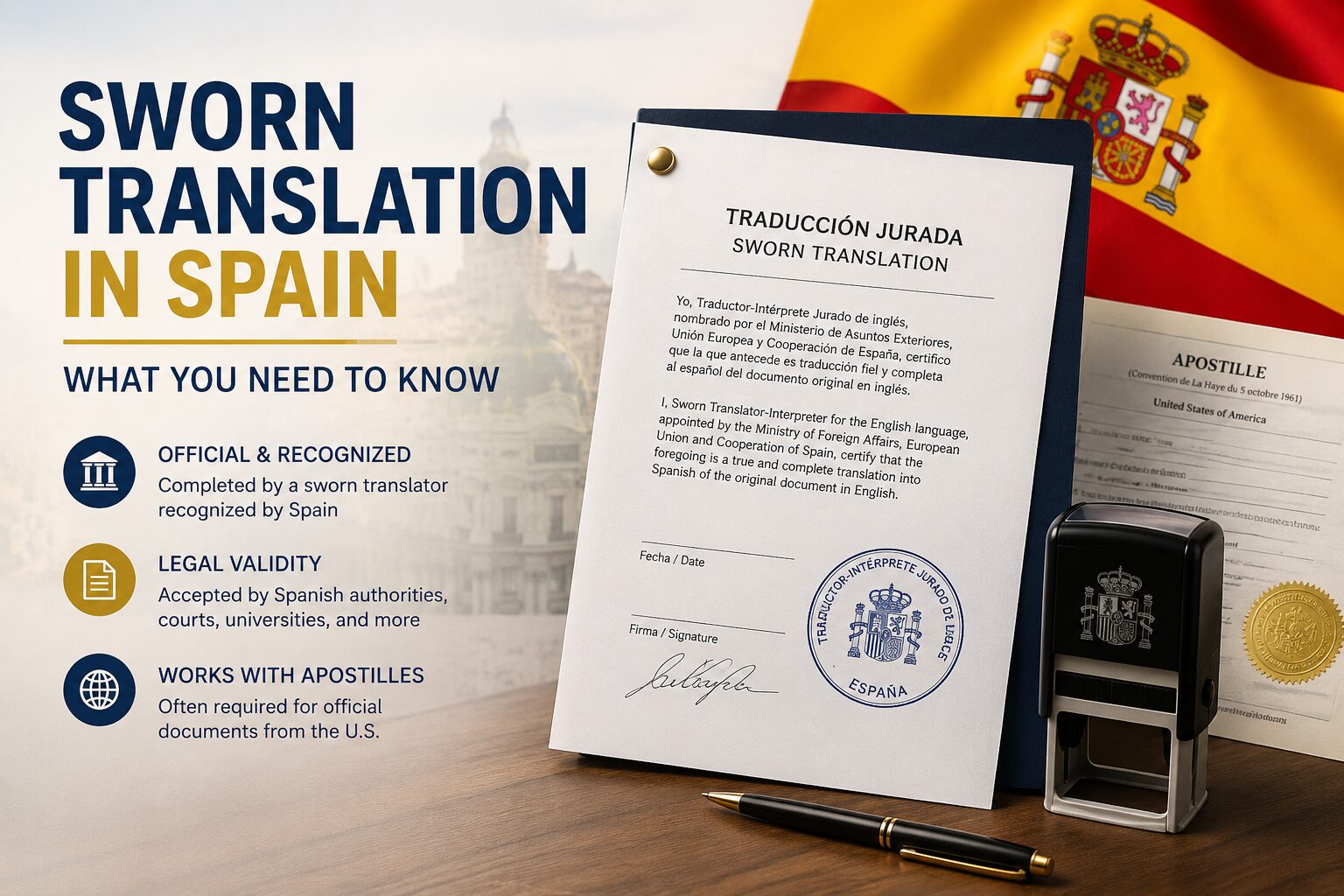
In Spain, a sworn translation, or traducción jurada, is prepared and signed by a Sworn Translator-Interpreter officially appointed by the Spanish Ministry of Foreign Affairs, European Union and Cooperation.

The translator’s official seal, signature, and certification give the translation formal standing before Spanish ministries, courts, consulates, universities, registries, and other public authorities.

That is what makes a sworn translation different from a standard certified translation prepared by a U.S. translation company or freelance translator.

Important: a sworn translation does not replace an apostille when the underlying U.S. document must be apostilled for use in Spain. The apostille and the sworn translation serve different purposes.
Sworn translation for official use in Spain

Not Every Spanish Translation Is a Sworn Translation

The translator must hold the official appointment recognized by Spain. A notarized translator statement or U.S. certification alone does not create a traducción jurada.

What Gives a Sworn Translation Legal Standing in Spain?

A sworn translation is recognized because it is completed by a translator who has been officially appointed by Spain’s Ministry of Foreign Affairs, European Union and Cooperation. The translator does more than convert the words from one language to another. They certify that the translation is complete and faithful to the source document.

The finished translation normally includes the translator’s certification statement, signature, official seal, and identifying information. Those elements allow Spanish authorities to recognize the translation as an official document without requiring a separate notarization of the translator’s signature.

Official Appointment

Recognized by Spain

The translator must hold the official status required by the Spanish government. General fluency, a private certification, or a notary stamp is not enough.

Certified Accuracy

Complete and Faithful

The translator certifies that the Spanish version accurately reflects the original document, including stamps, seals, notarial certificates, and apostilles when present.

Official Format

Seal, Signature, and Certification

The completed translation carries the formal elements Spanish authorities expect from a sworn translator.

A U.S. “certified translation” and a Spanish traducción jurada are not interchangeable terms. The receiving authority in Spain may specifically require the latter.

Where Does the Sworn Translation Fit Into the Process?

One of the most common questions we receive is whether documents should be translated before or after obtaining an apostille. In most situations involving Spain, the document is first prepared correctly, then apostilled, and finally translated by a sworn translator.

For example, if you’re submitting a diploma, university transcript, or other educational credential, the authentication process should generally be completed before the sworn translation is prepared. This allows the translator to translate the complete document package, including the underlying document, any notarial certificate, and the apostille itself.

Educational documents deserve special attention because Spain may examine how the document was authenticated before the apostille was issued. If you’re preparing academic records, we recommend reading our guide on preparing apostilled diplomas and transcripts for Spain, which explains the authentication chain in greater detail.

Every situation is different, but completing the steps in the proper order helps avoid unnecessary delays, duplicate translations, and additional costs.

Typical Sequence

For Most U.S. Documents

Document Preparation

Notarization (if required)

Apostille

Sworn Translation

Submission in Spain

How Florida Document Specialists Simplifies the Process

Preparing documents for use in Spain often involves more than obtaining an apostille or ordering a translation. The order in which each step is completed can make a significant difference, particularly for academic, legal, and civil documents.

At Florida Document Specialists, we review your documents before recommending the next step. If an apostille is required, we coordinate that process first. When the document is ready, we work directly with our trusted sworn translation partners in Spain to obtain an official traducción jurada recognized by Spanish authorities.

Instead of coordinating multiple companies, translators, and shipping arrangements yourself, you have a single point of contact from document review through final delivery.

Whether you need only a sworn translation or a complete apostille and translation package, we’ll help determine the most appropriate path for your specific documents.

One Point of Contact

Our Spain Services

  • Document review and guidance
  • Florida apostille coordination
  • Official sworn translations
  • Translation of apostilles and notarial certificates
  • International document delivery

Frequently Asked Questions About Sworn Translations for Spain

These are the questions we answer most often for clients preparing documents for use in Spain.

Can any certified translator prepare a sworn translation?

No. A sworn translation must be completed by a translator officially recognized by Spain. A certified translation prepared in the United States is not automatically considered a traducción jurada.

Do I need an apostille before the sworn translation?

Often, yes. When the underlying U.S. document requires an apostille for use in Spain, the apostille is generally obtained first so the sworn translator can translate the complete document package.

What documents commonly require a sworn translation?

Common examples include birth and marriage certificates, diplomas, academic transcripts, FBI background checks, powers of attorney, court records, corporate documents, and other official records submitted to Spanish authorities.

Can Florida Document Specialists coordinate both services?

Yes. We coordinate Florida apostille processing when required and work directly with our sworn translation partners in Spain, providing a single point of contact throughout the process.

Need a Sworn Translation for Spain?

Whether you already have an apostille or are just beginning the process, we’ll review your documents and help determine the most efficient path to obtaining an official sworn translation accepted in Spain.

Request a Sworn Translation →